The Marion Tribune

Follow Us On:

What’s the Scuttlebutt? Tennessee Aquarium opening ‘secretive’ new gallery March 7

Posted on Thursday, February 26, 2026 at 10:13 am


CASEY PHILIPS

Contributor 

Chattanooga, Tenn. – Do sharks glow in the dark? Can a shrimp out-box a prize fighter? Could a fish walk on the bottom of the ocean? What’s this about an animal with two sets of jaws?

What even is a lumpsucker?!

The truth behind a host of aquatic rumors and tall tales will be revealed on Saturday, March 7, when the Tennessee Aquarium pulls back the curtain on its new Scuttlebutt Reef gallery.

The latest addition to the Ocean Journey building, this fun, whimsical collection of 11 exhibits explores how nature can be both playfully mysterious and delightfully unexpected, introducing guests to some of the ocean’s most fascinating — and misunderstood — species.

“Our team has been working hard to create an intriguing guest experience that highlights reef-dwelling species from around the world,” says Aquarium President & CEO Andy Wood. “Our members and visitors will be thrilled to explore this engaging space and learn about a truly amazing collection of animals – some that we’ve never exhibited before.”

The gallery’s residents are a colorful cast of marine marvels, many of which have undeserved reputations, unexpected abilities or are outright misnamed.

Interactive, animated graphics will lure guests in with a captivating rumor, such as “There are aliens living in the ocean” or “Some fish have legs.” Once touched, the signs will display information — in English or Spanish — that debunks or, occasionally, supports these “tall tales.”

“It’s literally scuttlebutt or water cooler talk in action,” says Thom Demas, the Aquarium’s vice president and chief husbandry and exhibits officer. “This approach makes conveying a message fun. This is information that’s interesting, and I think that’ll help it stick with guests long after they return home.”

Exploring Scuttlebutt Reef is a bit like conducting a fun, interactive investigation. In some cases, guests will discover that fact really can be stranger than fiction.

The first animal visitors encounter will be Green Moray Eels, whose sinuous likeness features in the gallery’s logo. With their long, slender bodies and intimidatingly sharp teeth, these eels are often portrayed in films such as The Princess Bride or The Little Mermaid as scary or dangerous “sea serpents.” In reality, they are actually more shy than aggressive and pose no danger to humans.

Nearby, guests can see a brilliantly colored Peacock Mantis Shrimp. This crustacean is one of nature’s most thoroughly misnamed, since it isn’t a peacock or a mantis or a shrimp. However, with its club- or spear-like appendage, it can deliver the strongest punch in the animal kingdom and is capable of shattering even the hardest of shells.

As they explore further, guests will encounter many familiar-looking animals with unusual shapes or abilities.

Jelly lovers will delight at the rippling, prismatic display of colors caused by light-refracting frills along the edge of Comb Jellies. And expectations of how big a slug can get will have to be super-sized after seeing a display of California Sea Hares. This species of marine slug can grow to more than a kilogram (2.2 pounds).

“If people can walk out and feel like, ‘That’s something that I won’t forget,’ that’s a win,” Demas says.

To enhance the guest experience and aid them in their marine mythbusting, Scuttlebutt Reef also features a variety of fun, interactive elements. A movable, colored lens in the Swell Sharks exhibit allows guests to emulate how this thick-bodied shark’s eyes function. Sliding the lens in place — “putting on their shark eyes” — guests will see how these specifically adapted peepers make Swell Sharks appear to glow to each other in deep water. And about that Peacock Mantis Shrimp. Visitors can hit a padded pressure plate next to its habitat to measure the force of their blow and see how it stacks up against this pint-sized pugilist.

Scuttlebutt Reef features subtle nautical theming, with artificial rivets and a series of low height “porthole” monitors that display interactive animations and games designed with younger guests.  Arriving at the tail end of winter, the gallery will be a refreshingly colorful respite from the gray and the cold. Outgrowths of artificial coral emerge from the floor and walls to set the scene, but the palette really goes into overdrive inside the new, much-expanded living coral exhibit, with schools of prismatic fish and colonies of otherworldly corals.

Scuttlebutt Reef’s largest habitat recreates the ecosystems found in the Coral Triangle, a massive, life-rich swath of the Indo-Pacific Ocean. The gallery’s 6,000-gallon centerpiece exhibit is home to more than 40 species of fish, coral, and other marine invertebrates, including:

1. Blue Mandarin Dragonet

2.Bubble Coral

3. Flame Hawkfish

4. Pagoda Cup Coral

5. Long-spined Sea Urchins

6. Galaxy Coral

7. Gigas Clams

8. Elegant Unicornfish

Scuttlebutt Reef takes the place of the Boneless Beauties gallery, which opened alongside the Ocean Journey building in 2005. That gallery also featured a living reef display, which was so popular that the Aquarium wanted to bring it back in even grander fashion to continue celebrating these fragile, life-filled ecosystems.


“We decided we were going to just make it big, so we went four times bigger,” laughs Jeff Worley, the Aquarium’s director of exhibit services. “It’s going to be beautiful.”

Guests can appreciate the grand sweep of the reef through a 16-foot-wide acrylic window or immerse themselves “inside” via a wheelchair-accessible pop-in cutout at the end of the tank.

Scuttlebutt Reef aligns with the Aquarium’s over-arching mission to highlight the connection between human activity and aquatic communities. Whether they’re getting to know the new gallery’s species or are exploring the rest of Ocean Journey, visitors are reminded of the downstream impact their inland choices have on marine ecosystems, no matter how distant. Scuttlebutt Reef was partially funded by a grant from the State of Tennessee. The gallery’s live coral exhibit was generously supported by Drs. Audrey Haywood and David Wallace, and their children, Alvie and Daphne.

To learn more about the Scuttlebutt Reef gallery, visit tnaqua.org/exhibit/scuttlebutt-reef.

The rumors are true!

1. A “scuttlebutt” was a barrel (also known as a “butt”) that served as a supply of freshwater for sailors on long voyages. Crews gathered at the scuttlebutt to drink, swap tales and secrets, leading to the term’s association with the spread of rumors.

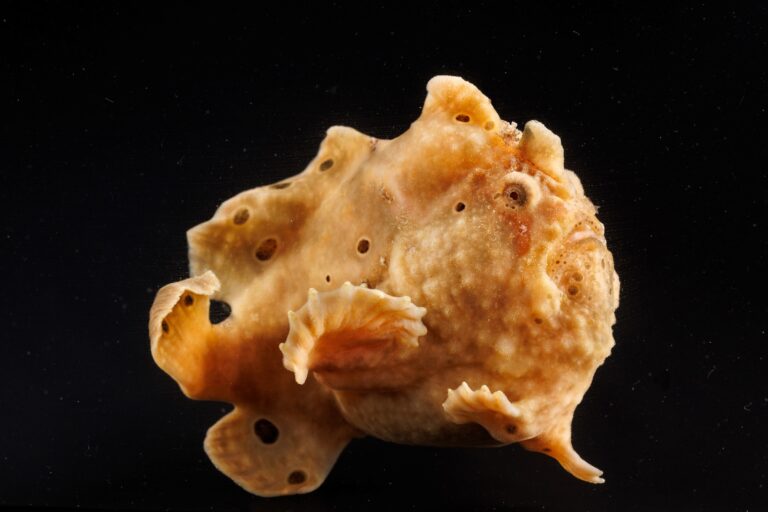
2. Warty Frogfish use modified fins that look like arms or legs to help them to “walk” across the ocean floor.

3. The hard, rock-like branches that act as a foundation for some reefs are made up of calcium carbonate secreted by some coral polyps.

4. Moray Eels have a second set of jaws located in their throat. This pharyngeal jaw helps to move prey captured by their primary jaws into their esophagus!

5. The Soapfish is named for its defensive adaptation to produce a toxic, foul-tasting mucus that creates a bubbly, soap-like lather.

6. The Peacock Mantis Shrimp can hit prey with a force 2,500 times greater than its bodyweight!

7. Groups (beds) of Garden Eels make their homes by digging holes into the seafloor using a specially adapted tail. They feed by extending their body into the current to seize passing prey, but at the first sign of danger, they rapidly retreat into these burrows.

The mission of the Tennessee Aquarium is to connect people with nature and empower them to make informed decisions about water and wildlife. Admission is $39.95 per adult and $29.95 for youths ages 4-17. Each ticket purchased helps support Aquarium conservation programs. The IMAX® 3D Theater is next door to the Aquarium. Ticket prices for 45-minute films are $9.95. Advance tickets may be purchased online at www.tnaqua.org or by phone at 1-800-262-0695. The Aquarium, located on the banks of the Tennessee River in Chattanooga, is a non-profit organization. Open every day except Thanksgiving and Christmas, the Aquarium and IMAX are accessible to people with disabilities.


<