

NOVA MCGILL
Contributor
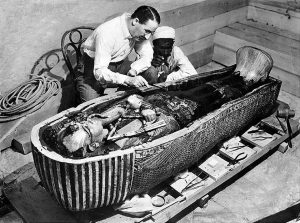
One of the most extraordinary discoveries in the history of archaeology was the unearthing of King Tutankhamun’s tomb on November 4, 1922. Over a century later, the story of how British archaeologist Howard Carter uncovered the resting place of the young pharaoh continues to captivate the world.
After years of fruitless digging in Egypt’s Valley of the Kings, Carter and his patron Lord Carnarvon, were close to giving up when a local worker stumbled upon the top step of a buried staircase. Beneath the sands lay a sealed doorway stamped with Tutankhamun’s royal insignia, signaling that they had found something truly extraordinary.
When the tomb was finally opened later that month, the world watched in awe. Inside were thousands of artifacts, ranging from golden statues and jewelry to the now-iconic solid gold funerary mask that became a symbol of ancient Egypt itself. Unlike most royal tombs, which had been looted centuries earlier, Tutankhamun’s burial chamber was remarkably well preserved—offering an unprecedented glimpse into the life, death, and culture of a pharaoh who died at just 19 years old.
The discovery not only reignited global fascination with ancient Egypt but also transformed modern archaeology, emphasizing careful excavation and preservation. More than a hundred years later, the treasures of King Tut continues to tour museums worldwide, inspiring generations of historians, artists, and explorers. What began as a dusty dig in the Valley of the Kings became a defining moment in our understanding of human history—a reminder that sometimes, the past waits patiently beneath the sand for someone curious enough to uncover it.
Photo via Public Domain through Wikipedia Commons