

NOVA MCGILL
Contributor
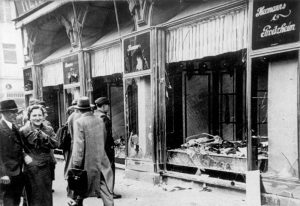
On the ninth of November, immediately in the early hours of 1938, the Nazi rulers of Germany coordinated and directed attacks against Jewries in Germany, Austria, and parts of Czechoslovakia. The event popularly became known as Kristallnacht, which has been referred to as the “Night of Broken Glass”. Kristallnacht became the turning point in the increase of Nazi anti-Jewish policy. Jews had at this point been officially subjected to legal discrimination, social exclusion, and economic constraints under the Nazis. Kristallnacht demonstrated clearly that the regime was prepared to abandon legislation and move into open and organized violence.
It was officially reported to the Nazi government that the pogrom was a real spontaneous reaction to the revenge killing of the German-Jewish diplomat Ernst vom Rath because of a young Jew; he was said to have married a joyful boy from Paris. However, the reality is that evidence shows the attacks were planned and encouraged by Nazi leadership. On the night of November 9 and the following day, members of the SA, SS, Hitler Youth, and various other groups smashed the homes, shops, and places of worship of Jews, all free of police intervention. Over 1,400 synagogues were burnt or otherwise damaged; thousands of Jewish-owned shops were destroyed, including an innumerable amount of homes that were invaded. Such actions were specifically designed to black out Jews from public life and dismantle the physical presence of the Jewish communal structures.
The consequences were somber: at least 91 Jews died during the event, exact figures likely higher in number. About 30,000 Jewish men were arrested and sent to concentration camps such as Dachau, Buchenwald, and Sachsenhausen, where they suffered under harsh, severely detrimental conditions, including coercive labor. This was then compounded by new economic sanctions imposed by the Nazi government, including the seizure of insurance and the forced closing of the remaining Jewish businesses, while fining the Jews for damage amounting to 1 billion Reichsmarks caused by the pogrom.
It was evident that Kristallnacht marked a change in Nazi policy, showcasing how in the future, the regime would initiate its anti-Semitic campaign with greater violence. It also highlighted the limited reaction of the international community. While foreign governments outwardly condemned what was transpiring, they did not do anything that would result in shaking the path of persecution by the Nazis. The pogrom was only a precursory signal of the more global and deadly actions that would follow during the Holocaust.
Photo from German Federal Archives