

JARRETT GOODMAN
Staff Writer
The Tennessee Aquarium, one of the nation’s most widely recognized aquariums, has introduced a brand-new gallery for guests to experience firsthand inside the facility’s Ocean Journey building: the Scuttlebutt Reef Gallery.
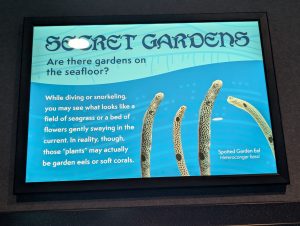
First opening to the public Saturday, March 7, the new Scuttlebutt Reef area houses a large array of new and aquatic wildlife found across the world’s oceans. A total of 11 exhibits are housed inside the new area of the aquarium, each containing animal species ranging from bioluminescent sharks and spotted garden eels to coral, urchins, and fuzzy dwarf lionfish. Adam Johnson, Animal Care Facility Lead, explained the purpose of the exhibit is to demonstrate and address rumors surrounding the ocean’s more hidden and obscure creatures, with several of the more commonly asked questions on display and answered in full detail as to a different species’ behavior or contribution to the environment.
“The goal of the gallery is to address rumors about animals and the different adaptations that the animals have,” Johnson said. “So guests can come and interact with animals that we’ve never had in our collection before.”
Opening in May 1992 within the heart of downtown Chattanooga, the Tennessee Aquarium has cemented itself as among the city’s most popular attractions, garnering 840,000 visitors a year to its abundant collection of aquatic wildlife from around the world. Thom Benson, Vice President and Chief Marketing & Communications Officer, touched on the significance of introducing new exhibits within the aquarium and explained that new galleries not only help to keep the aquarium experience refreshing and new for visitors, but also allows guests to walk away with a broader understanding of the importance of various wildlife and how humanity can help into preserving all fresh and oceanic bodies of water.
“When we talk about sea creatures, we’re a landlocked state,” Benson said. “Tennessee is right in the middle of the Southeast, but the river that runs right behind our facility is our connection to the ocean. So even though we are landlocked residents, our direct connection is the freshwater that runs through our backyard.”
Benson further noted environmental education and awareness, whether through the exhibits that dominate the River and Ocean Journey facilities or the aquarium’s many programs and partnerships, allows for a better understanding of the importance of keeping local bodies of water clean and protected, particularity the Tennessee River. He wishes that all who come to visit the aquarium are not only left with memories to cherish but also with a new understanding as to the river’s integrity towards the world’s living ecosystems.
“We try to help people understand the importance of freshwater and how it connects to all life,” Benson said. “So if we’re doing a good job at taking care of the river right here, it’s good for us but also good for the aquatic life in the Southeast, and all the species that depend on that water downstream.”
The Tennessee Aquarium is open seven days a week and year-round except on Thanksgiving and Christmas. For more information, visit the Tennessee Aquarium’s website at https://tnaqua.org/.