

JARRETT GOODMAN
Staff Writer
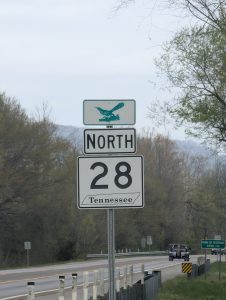
Whitwell’s ongoing streetlight project for the stretch of Highway 28 entering the heart of the town has made progress following a 4-1 vote to have an environmental study be conducted onsite.
During Whitwell’s March meeting, discussion surrounding the project unfolded as the town’s Board of Mayor & Commissioners (BoMC) touched upon an environmental study aiming to be conducted by consulting firm Croy Engineering. According to City Manager Lonnie Cleek, the Tennessee Department of Transportation (TDOT) suggested that Croy Engineering would oversee the environmental study of the projected site where the new light posts would be potentially placed. The study serves as the next major step towards the portion of Highway 28 receiving new street lighting, the project first discussed during Whitwell’s September 2025 meeting.
“We asked Croy for a submittal as to what they thought the study would cost us before we got involved, or would say yay or nay,” Cleek said. “They reckoned that that study would be at least $10,000.”
If approved, the study would be conducted directly in a patch of swamp located directly in the forests near Highway 28. Cleek explained the study would allow surveyors to determine not only what would needed to be removed, but also where the light posts themselves would be placed and what form of poles would be required for installation. Additionally, Cleek mentioned even when spending $10,000 on the study, TDOT would retain the authority to reject the results the study would produce.
“We spend the $10,000 for the study, submit it to TDOT, and they could still deny the property,” Cleek said.
As the discussion continued, varying thoughts were shared by members of the council. Commissioner David Hudson felt because of the project being procedure based, the board should move forward with approving the study to accommodate for not only existing businesses, but also new ones to potentially make their way into the community, attracting overall growth to the area. Vice Mayor Mike Dillon, meanwhile, expressed concerns as to the city utilizing $10,000 from its fund balance to cover the costs for the study, particuarlily in comparison towards the added costs of new light posts to be installed.
“You’re going to take $10,000 out of the fund balance that we really don’t need to be taking out of from the fund balance,” Dillon said. “Plus that’s just for the survey. You still got to put in the pole, and that’s going to cost thousands of dollars in labor, electric, and all his other stuff.”
Ultimately, a vote to have an environmental study be conducted up to $10,000 in costs was passed in a 4-1 vote, with Dillon voting against the decision.